COR KIDS · ATHLETES OF CHRIST
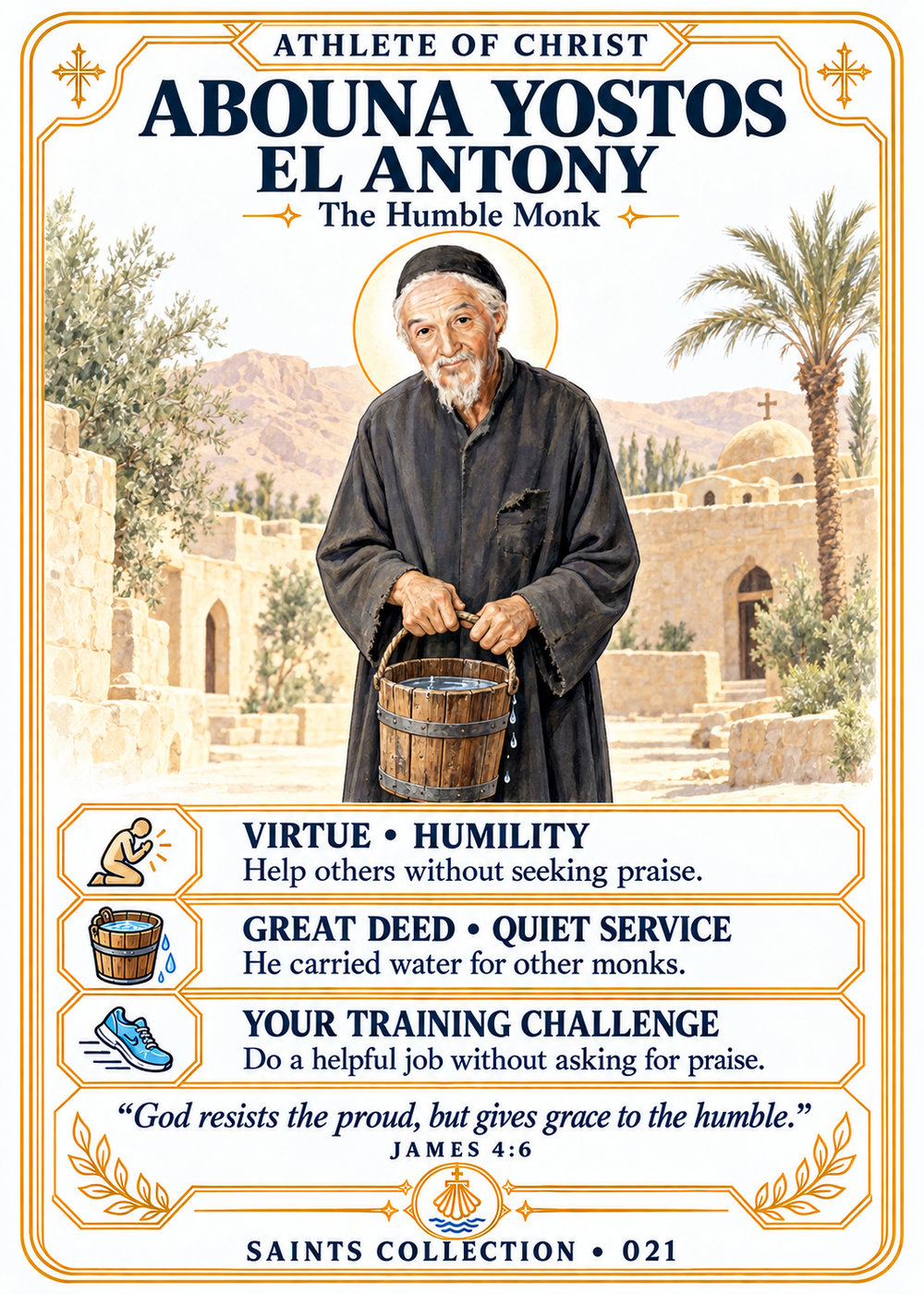
Humility
The quick story
Abouna Yostos El Anthony lived at Saint Anthony's Monastery in Egypt. He is remembered for speaking very little. His quietness went together with prayer, humility, and practical love: he carried water for other monks and loved reading Scripture.
One question people remembered was, "What time is it?" His Coptic biography connects it with being ready to meet the Lord. For us, it can be a gentle reminder that today is a gift: we have time to pray, help, forgive, and thank God. We do not need to wait for tomorrow to do something kind.
He also spoke with deep reverence about Holy Communion. His few words mattered because they came from a life centred on Jesus. We can learn from his example by pausing before speaking and choosing words that help. Being quiet is not the only way to be holy; we also need to ask questions, encourage others, and speak up when we need help.
Explore the life
PART 1
1. From tailor to monk
Born in 1910 and named Naguib, he worked with his father as a tailor. He later became a monk at Saint Anthony’s Monastery in 1941.
PART 2
2. Why did he speak so little?
His biography describes him as humble and a man of few words. It presents his silence as a lesson taught through his life. For children, a useful application is to make room for listening: let someone finish, notice how they feel, and answer thoughtfully.
PART 3
3. "What time is it?"
He often asked people, "What time is it?" In Arabic: "الساعة كام؟" St-Takla explains this as the question of someone waiting for the time to depart and meet the Lord. A gentle way to apply it is to remember that our time is precious. What loving thing can you do today?
PART 4
4. "Communion is light and fire"
His biography records this saying about Holy Communion. These are words of reverence for a holy mystery. For a child, the lesson is to approach Communion prayerfully and respectfully. Ask your priest or Sunday School teacher to explain the saying further; it is not about ordinary flames.
PART 5
5. Love shown through a small job
He fetched water for other monks. The bucket on his card reminds us of that service. Think of a quiet job you could do with care: tidying a shared table, returning supplies, or helping prepare for an activity. Small acts can make a real difference.
PART 6
6. Prayer and the Bible
He knew the Psalms by heart and enjoyed the Gospel in Coptic. Try learning one short verse with an adult. First ask what it means, then think of one situation where its message might guide your choices.
PART 7
7. Remembering his example
He departed in 1976, and the Church formally recognized his sainthood in 2022. His life invites us to connect prayer with action. Which do you want to practise today: listening patiently, helping quietly, or choosing encouraging words?
PART 8
8. Your turn: pause, listen, help
Spend a brief quiet moment thanking God. Listen carefully to someone today, then find a useful way to help. This is our activity, not a rule that children must stay silent. Your questions and feelings matter, and you should always speak up when you need support.
Think about it
Abouna Yostos often asked, "What time is it?" What good use could you make of the time you have today?
Tap to discover the answer
You could pray, help with a task, thank someone, or say sorry. His biography connects his question with being ready to meet the Lord. Our activity is to use today lovingly, one small choice at a time.
Try it today
Pause for a quiet moment and ask, "How can I use this time with love?" Choose one helpful action. Before speaking, consider whether your words are kind and useful. Remember to speak up whenever you need help.
May the prayers of the saints be with us. Amen.