COR KIDS · ATHLETES OF CHRIST
Generosity
The quick story
Before he became known as Anba Abraam, the Friend of the Poor, he was a boy named Paul Gabriel. Born in Egypt in 1829, he learned the Bible, Psalms, and church hymns at church school. As a young man, he became a monk at El-Muharrak Monastery. His love for God showed in the way he welcomed people who needed help.
In 1881, he became Bishop of Fayoum and Giza and received the name Abraam. He made his home a place where people could find food, clothing, and shelter. He wanted the people he cared for to receive the same food he ate. They mattered to him as members of one family.
Anba Abraam also loved prayer and the Bible. His generosity reminds us that following Jesus includes noticing other people's needs. We can share supplies, make time to help, and welcome someone who feels left out. We do not have to wait until we are grown up to begin loving others in practical ways.
Explore the life
PART 1
1. A boy who loved learning about God
Paul Gabriel was born in 1829. At church school, he learned reading, writing, arithmetic, Scripture, and hymns. He became a deacon while still young. The prayers and lessons he learned helped prepare him for a lifetime of serving God and caring for others.
PART 2
2. Father Paul opens the doors
At nineteen, he became a monk at El-Muharrak Monastery, where he was known as Father Paul. Later, as the monastery leader, he welcomed people who needed help. Young men also came to learn from him. Prayer and generous service were both important parts of his life.
PART 3
3. Kindness through a difficult change
Some monks disagreed with how much he gave to people in need, and he was removed as leader. He later moved to El-Baramous Monastery. There he studied the Bible and taught other monks. This difficult change did not end his life of service.
PART 4
4. A bishop with a welcoming home
In 1881, he became Bishop Abraam. He set aside space in his home for people living in poverty, people who were blind, and people who were sick. He spent time with them at their meals. His home became a place of care and welcome.
PART 5
5. Sharing with respect
The Synaxarium says that Anba Abraam would not accept better food for himself than the food served to the people in his care. He also provided clothing and shelter. His example teaches us to share thoughtfully and treat the person receiving help with dignity.
PART 6
6. A simple life close to God
Anba Abraam lived simply and did not seek special treatment. He loved the Psalms and gathered people for evening prayer and Bible study. His care for others grew alongside his life with God. We can ask Jesus to help us notice where kindness is needed.
PART 7
7. Remembering the Friend of the Poor
Anba Abraam departed on June 10, 1914. The Church remembers him on Paona 3. Many Christians and Muslims attended his funeral, showing how widely he was loved. His story continues to encourage us to make room for others in our lives.
PART 8
8. Your turn: time, supplies, or kindness
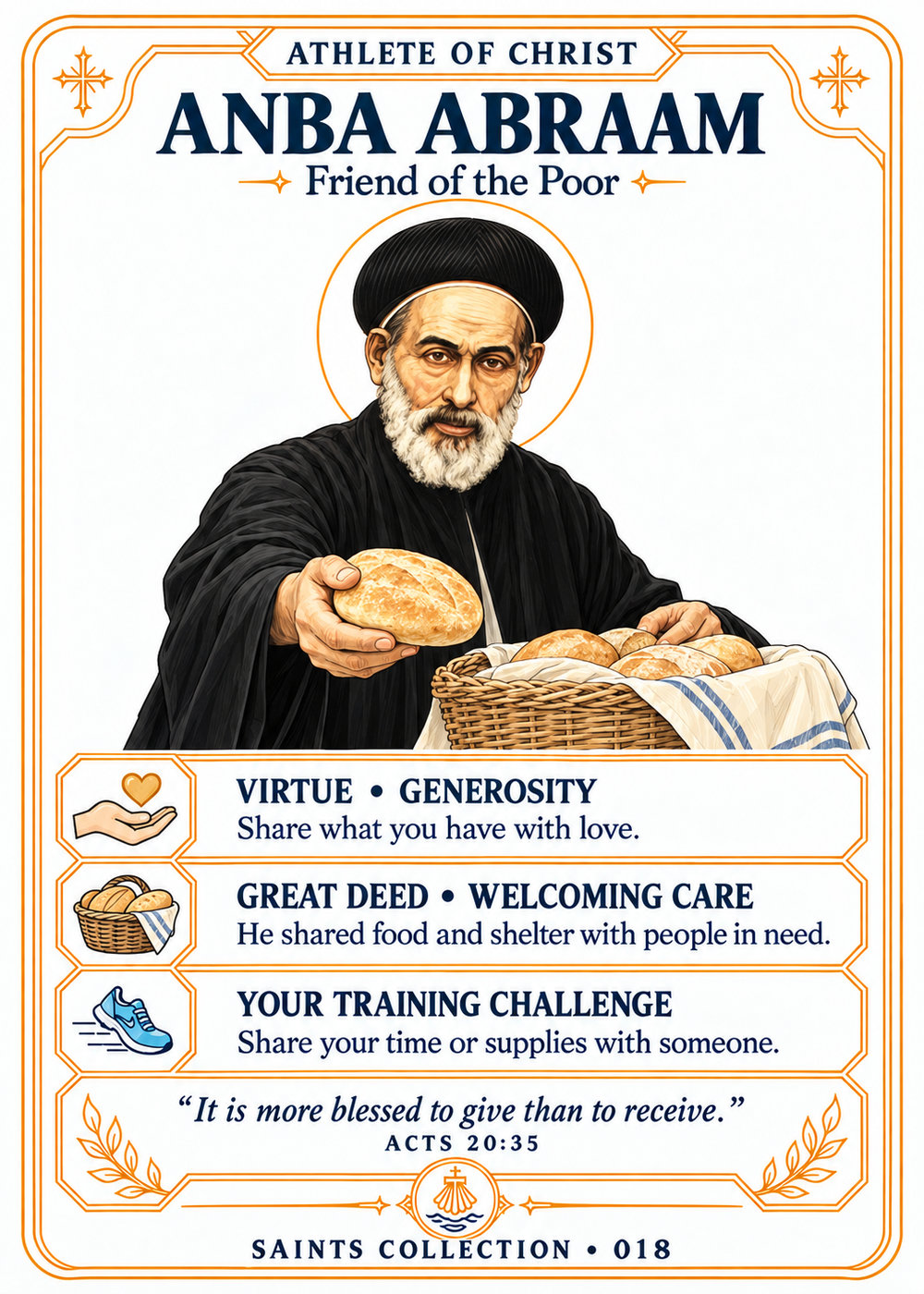
Look at the bread basket on your card. It reminds us of his generous care. Now choose something you can share: your time, a supply, or a turn in a game. Ask, "What would help this person?" This is an activity for us to practise today.
Think about it
Anba Abraam wanted the people staying in his home to receive the same food he ate. What does that teach us about sharing?
Tap to discover the answer
Sharing should show love and respect. Everyone matters to God. We can offer something useful and in good condition, take fair turns, and include others as friends. Anba Abraam cared about how people were treated as well as what they received.
Try it today
Share with love today: lend a useful supply, give your time to help, or invite someone into your game. With your family, choose a good-quality item to donate if you can. Pray for the person who will receive it, and give without expecting praise.
May the prayers of the saints be with us. Amen.